every
detail
counts
The term 'Laguiole' refers to a type of knife and the village where it originated, located in Aveyron on the Aubrac plateau. Any manufacturer can adopt the Laguiole design.
That's why it is useful to know the features that distinguish a knife genuinely made in Laguiole, in keeping with the cutlery-making tradition, from a mere reproduction.
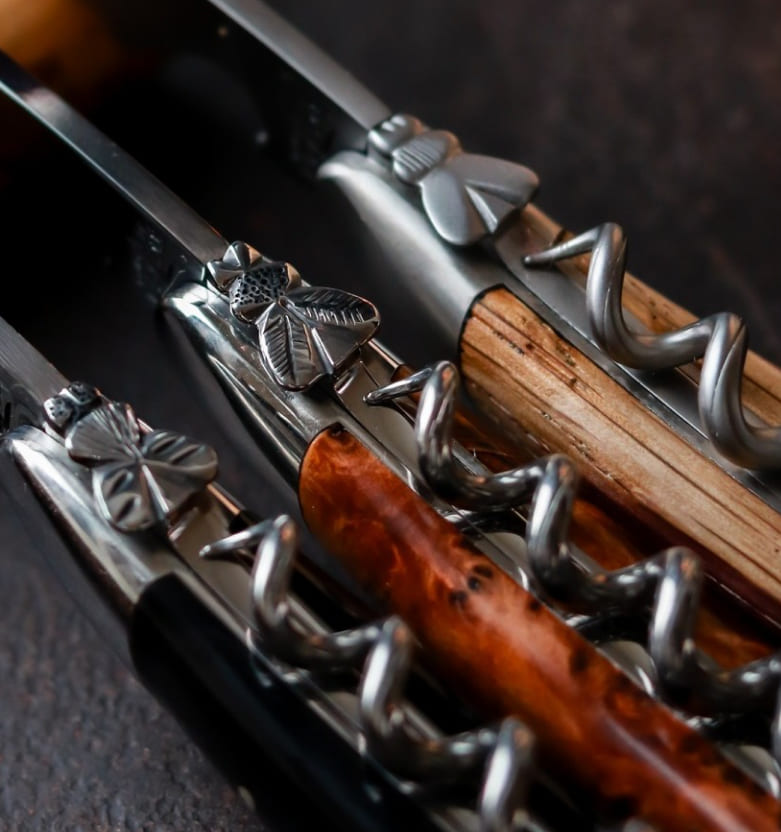
Here are the key features of a Forge de Laguiole knife, and what they tell you about the quality of a piece.
The blade
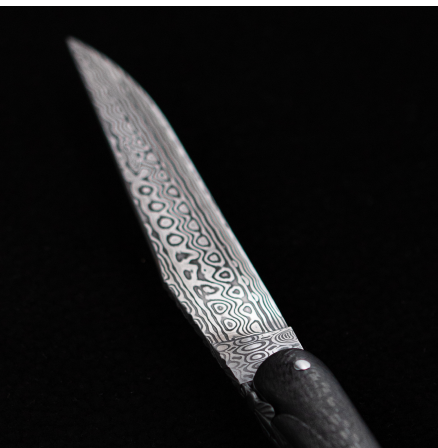
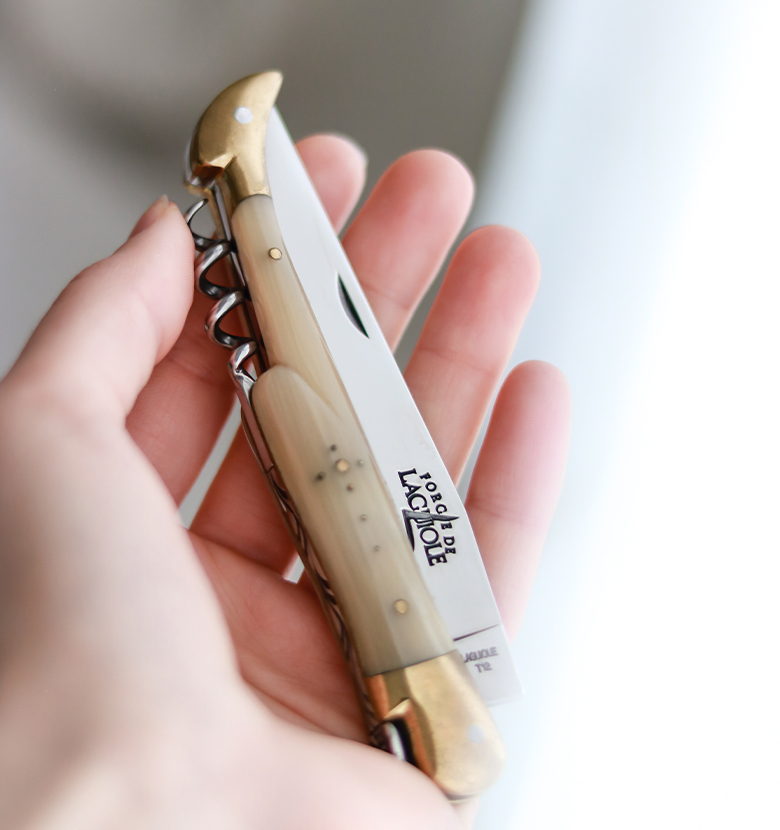
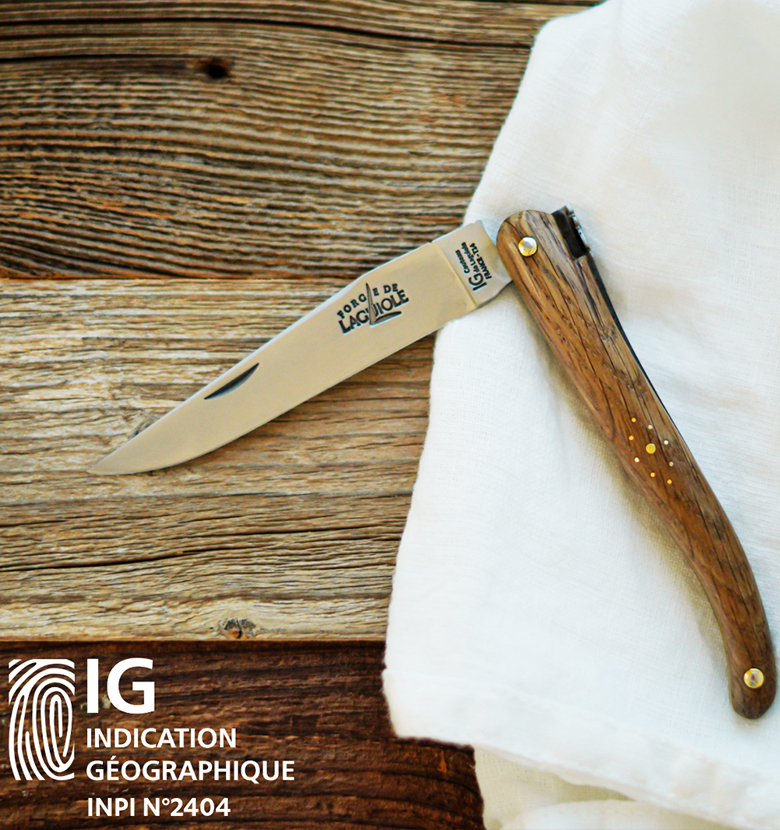
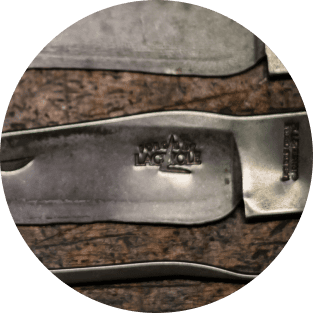
The blade of a Laguiole knife is recognisable by its yatagan shape, a gentle curve that gives it an elegant and unmistakable silhouette. At Forge de Laguiole, the blades of our folding knives are hot-forged at over 1,000 °C in our workshop in Laguiole: this process densifies the steel, resulting in a longer-lasting edge, excellent durability and ease of sharpening. Made from stainless steel (or carbon steel on request), they are produced without micro-serration: a knife must cut cleanly, never tear. Each blade bears our Forge de Laguiole logo as well as the inscription 'Made in Laguiole France — T14' or, for eligible models, 'IG Couteau de Laguiole – France – T14', the hallmark of our craftsmanship.
The rivets and the notch
Hold a Forge de Laguiole knife in your hand and look at the rivets: they align with the axis of the handle with a precision that owes nothing to chance. It is the sort of detail you notice once, and then you can no longer fail to see it. The notch is the small indentation at the front of the blade, used to open it. It must be prominent, fine, precise, and easily accessible without being bulky. A notch that is too thick or poorly positioned is a sign of sloppy workmanship.
The bolsters
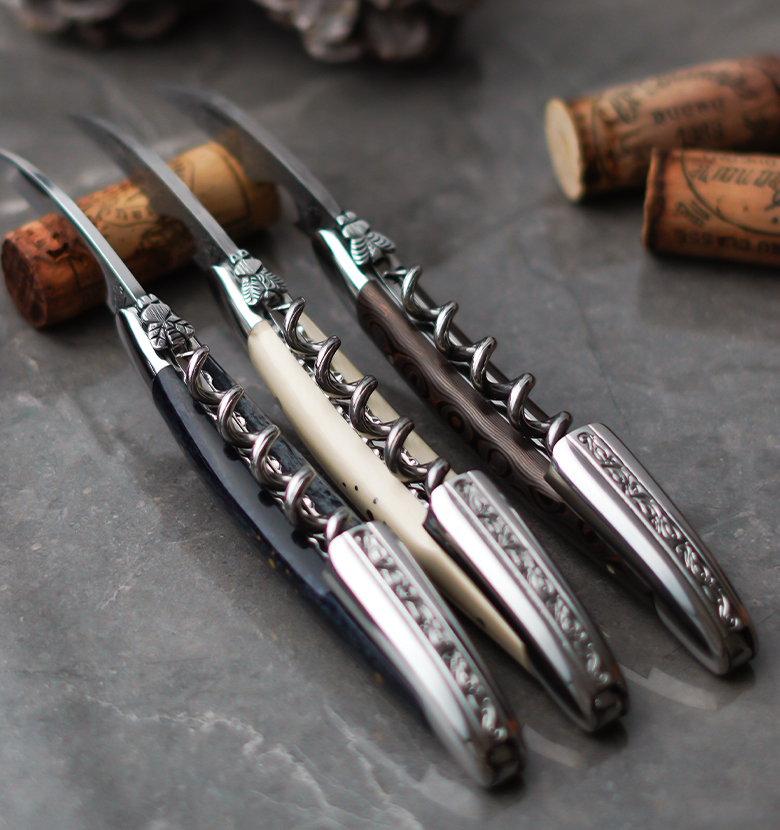
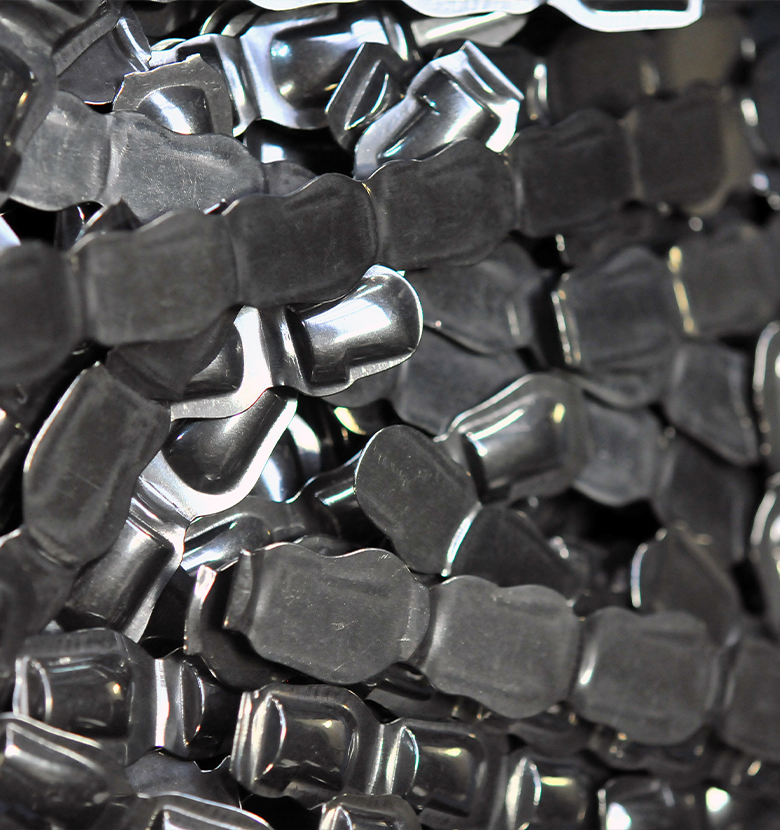
There are details that aren't immediately apparent. You discover them by holding the knife in your hand, turning it over, letting your thumb glide over the metal. The bolster is one such detail. A solid piece fitted at the ends of the handle, it protects it, anchors it, and gives it that presence we recognise without always being able to explain it. At Forge de Laguiole, we have chosen to make them ourselves, in stainless steel or brass. Not for the sake of show, but because it is at this level of detail that the integrity of a knife is determined. The stainless steel is hot-forged, worked under heat to give it its strength. Brass is cold-formed, with the patience this material demands to reveal its character. Our bolsters are always solid. No edging, no synthetic materials. Just the metal, the time we devote to it, and a respect for a job well done.
The geographical
indication
The name Laguiole has long belonged to everyone, which was tantamount to saying it belonged to no one. Knives made far from the Aubrac region, sometimes on the other side of the world, have been able to bear this name without restriction for decades. Since October 2024, the INPI has officially certified the 'Couteau de Laguiole' Geographical Indication, enabling the identification of knives made here.
Production is restricted to 24 municipalities in northern Aveyron, within a 30-kilometre radius of the village. If you see this logo on a knife, the answer is simple: it was made in Aveyron, by cutlers trained here, using controlled materials. Nowhere else. At Forge de Laguiole, we have been manufacturing here since our founding in 1987. The GI hasn't changed us. It has simply made visible what we were already doing.
From the Aubrac plateau, Forge de Laguiole collaborates with Michelin-starred chefs, architects and renowned designers to reinvent the Laguiole knife. These collaborations give rise to exceptional creations, where the exacting standards of haute cuisine, innovative design and the excellence of French cutlery craftsmanship come together to bring unique pieces to life.
in collaboration
with Philippe Starck
An iconic collaboration with Philippe Starck, a leading figure in contemporary design. For Forge de Laguiole, he boldly reinterprets the Forge de Laguiole knife, rethinking its lines and materials. From this collaboration emerges a unique creation, where innovation, ergonomics and cutlery craftsmanship come together in an object that is both functional and visionary.
Discover the collection
in collaboration
with C+B Lefebvre
Their approach to industrial design—rigorous, functional and uncompromisingly free of superfluous elements—has led them to rethink the very form of the knife. Every curve retained is a justified curve. Every proportion is the result of a decision, never of habit.
Discover the collection
in collaboration
with the Bras family
The Bras family has forged a loyal partnership with Forge de Laguiole, deeply rooted in the Aubrac region. From the cheese knife designed by André and Michel Bras for Le Suquet, to the Capuchadou in densified ash – a tribute to the shepherds of the plateau – and the Café Bras knife made from a plant-based composite fibre, whose shape evokes the brushes of the painter Soulages, each creation is a dialogue between cuisine, the local area and modernity.
Discover the collection
in collaboration
with Olivier Gagnère
Olivier Gagnère has created two distinct collaborations for Forge de Laguiole. To mark the centenary of Roquefort Papillon, he designed a cheese knife in black horn where the butterfly replaces the bee. For Jean-Yves Schillinger's restaurant JY'S in Colmar, he designed a table knife with jeweller's refinement, featuring a gilded brass border and a so-called 'rice grain' bee set like a cabochon.
Discover the collection
in collaboration
with Éric Raffy
An architect and designer with a passion for Japan, where he has notably designed a Buddhist temple in Tokyo, Éric Raffy has created a table knife for Forge de Laguiole whose clean lines are its defining feature: a curved handle in black acrylic glass, with a blade sharpened beneath a bee of an original design.
Discover the collection
in collaboration
with Anne-Sophie Pic
The Anne-Sophie Pic knife, designed by C+B Lefebvre and inspired by the chef's culinary creations, features a slender ebony handle, a stainless steel blade with a sharp edge, and a fly merely hinted at. It reflects the woman who inspired it: refined and radical. Anne-Sophie Pic holds three Michelin stars and was the first woman to be named World's Best Female Chef in 2010.
Discover the collection
in collaboration
with Andrée Putman
Created by Andrée Putman and her daughter Olivia as part of Studio Putman, this series offers an understated reinterpretation of two hallmarks of the cutlery tradition: the straight handle and the traditional bee motif. Available in ebony or densified ash, this knife is one of the last creations designed by Andrée Putman, a pioneer of French design best known for the renovation of the Morgans Hotel in New York.
Discover the collection
in collaboration
with Jean-Michel Wilmotte
In 2004, Jean-Michel Wilmotte and Forge de Laguiole were the first to introduce Dacryl®, an acrylic crystal intended for construction, into cutlery. This multicoloured range has been seen all over the world. In 2012, he designed a knife with Cyril Lignac for the restaurant Le Quinzième, featuring an aluminium handle treated using an exclusive process, with a blade that does not rest on the table.
Discover the collection
in collaboration
with Christian Ghion
Christian Ghion is one of Forge de Laguiole's most loyal designers. He designed the Massif, a monobloc stainless steel knife; the Passedat, a dual-purpose knife for meat and fish for the three-Michelin-starred chef at Le Petit Nice; the Ardent folding knife, inspired by Fanny Ardant and crafted from ebony and solid silver; and L'Universel in 2021, featuring a teardrop-shaped handle reminiscent of 18th-century French cutlery.
Discover the collection
in collaboration
with Santos Bregana
Santos Bregana designed the León knife for Forge de Laguiole, in collaboration with Spanish chef José Gordón, an iconic figure in the culinary world and owner of the restaurant El Capricho, considered one of the finest steak restaurants in the world. This creation brings together two cultures of excellence in a knife crafted for the most discerning meat-eater.
Discover the collection1828-1829
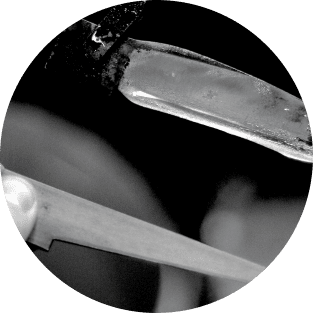
Casimir Antoine Moulin settles in Laguiole and becomes the village's first cutler. This marks the first transition from the trade of edge-tool maker to cutler.
1850 – 1860
The silhouette becomes more refined. The current shape of the Laguiole knife is born.
1880
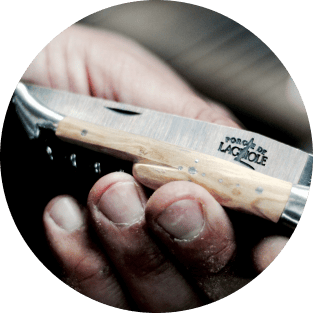
From 1880 onwards, the three-piece knife appears, comprising a corkscrew and an awl. The corkscrew was introduced in response to demand from the people of Aveyron who had set out to conquer the cafés of Paris. The awl, meanwhile, remained in the hands of the farmers of the Aubrac.
1909
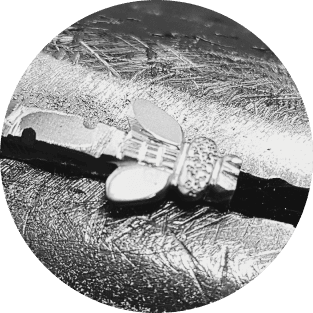
The first bee on a Laguiole knife. According to legend, its presence on the knives was a tribute paid to the courage of the people of Laguiole by Emperor Napoleon himself.
1914 – 1918
The First World War, combined with rural depopulation, led to a sharp decline in the workforce in Laguiole, causing lasting damage to the local cutlery industry.
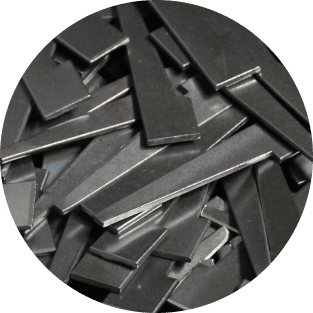
1985
Driven by a committed team from the Aubrac plateau, including the mayor at the time, the revival of Laguiole knife production came to life with the creation of Forge de Laguiole. This initiative marked a decisive turning point: the knife finally returned to Laguiole, where it was born, breathing new life into a craft that is emblematic of the region.
1987
Forge de Laguiole opened its doors in the village. For the first time, a registered trademark guaranteed the origin and traceability of every knife produced there. The story continues in Laguiole.
the source of
our
inspiration
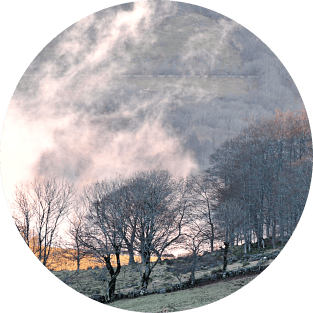
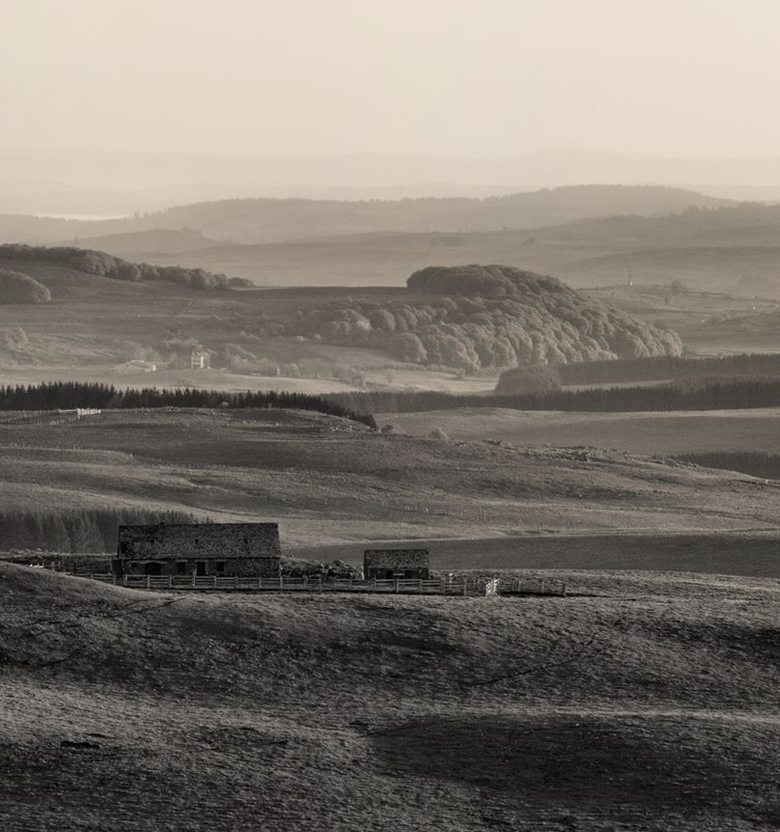
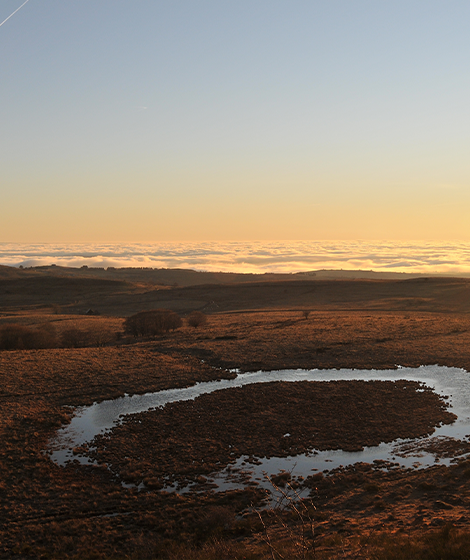
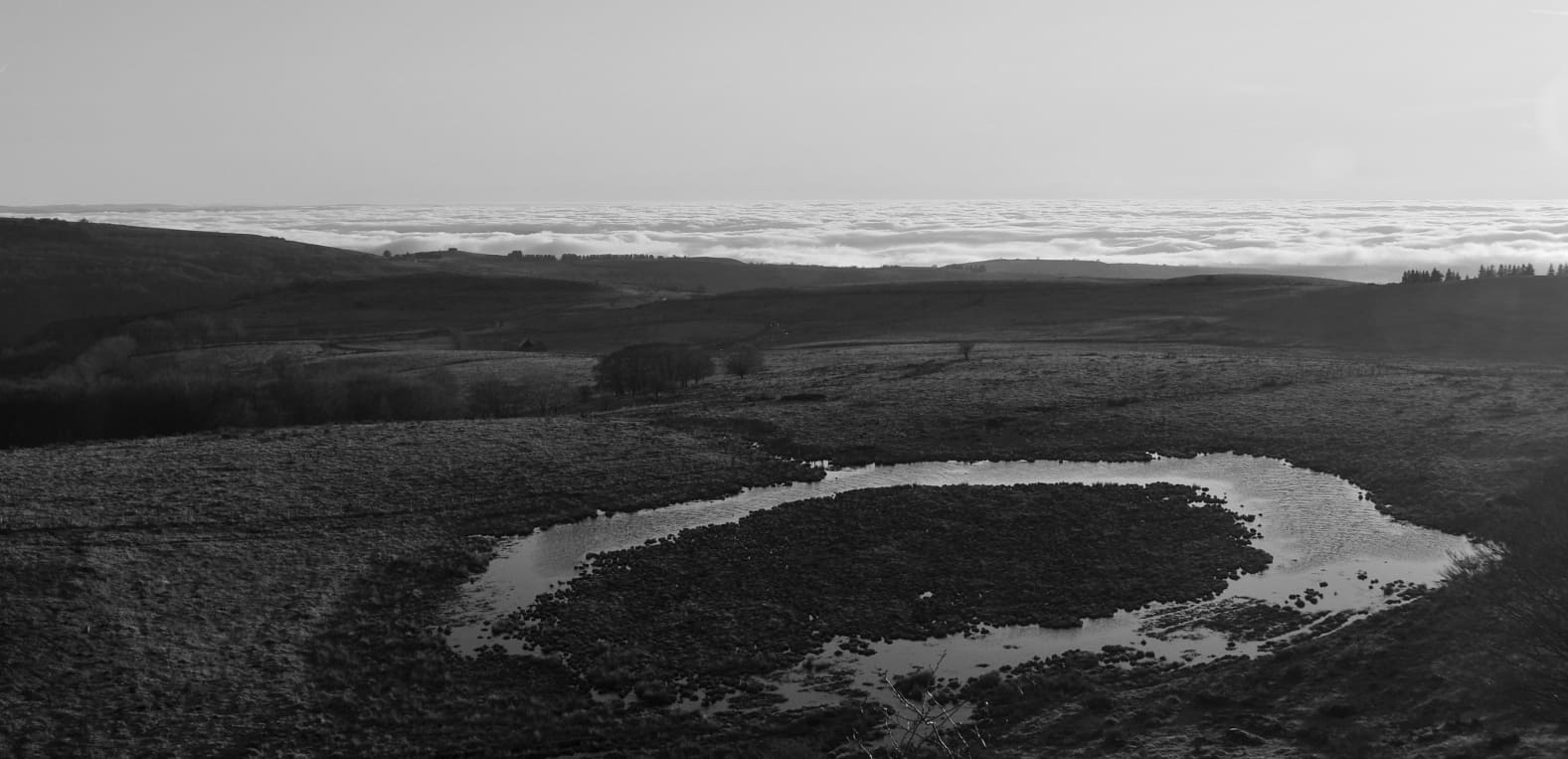
The Aubrac is a land that refuses to be tamed. Wild, proud and windswept, nestled between the departments of Aveyron, Cantal and Lozère, it has shaped its people in its own image. Dotted with its burons, those stone shelters where shepherds lived during the summer grazing season, it watches the years go by, subject to an uncompromising climate.
A land of livestock farming and tradition, the Aubrac has forged its people, who have learnt to make the most of every resource this environment offers, whilst preserving it with care. It is this region that inspires us every day.
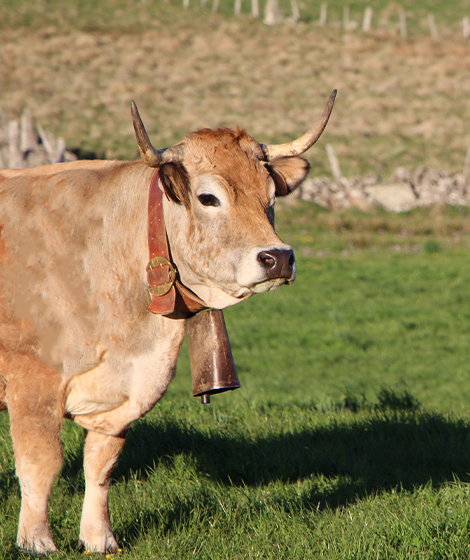
The Aubrac is, above all, a land of livestock farming. And at the heart of this region, one breed embodies its wild spirit better than any other: the Aubrac. Robust, elegant, with a wheat-coloured coat and black-rimmed eyes, it reigns supreme over these vast plains. For centuries, the plateau's herders have built their lives around it, forging a relationship with nature that is as demanding as it is authentic. A quiet nobility that is reflected, in its own way, in each of our knives.
The Aubrac gives nothing without effort, but to those who know how to listen to it, it offers everything. Designated a Regional Nature Park, this bountiful plateau has managed to transform the harshness of its climate into excellence. Here, the milk from cows grazing on flower-filled meadows at over 1,000 metres becomes Laguiole AOP, a mature cheese with incomparable flavours. Aubrac beef, reared in the open air, stands out as one of the finest in France. And recently, a whisky, Twelve, has been created in Laguiole itself, distilled from the plateau's spring waters, as if the Aubrac had found a touch of Scotland in its peat bogs. A region, its people, and exceptional products. The Laguiole knife is its natural heir.
immerse yourself
in the heart
of the Aubrac
Transhumance
Every spring, a ritual as old as the Aubrac region itself is re-enacted. The herds leave the valleys and make their way up to the summer pastures, guided by the herdsmen just as their ancestors did before them. A moment suspended in time, between tradition and emotion, when the plateau comes back to life and bursts into colour.
Aubrac in TranshumanceThe buron
Stone huts perched on the hillsides, the burons are the living memory of the Aubrac. These rudimentary shelters once provided a home for shepherds during the summer grazing season, whilst they made cheese. Even today, they stand watch over the plateau like silent guardians of the passing of time.
The buronAligot from the Aubrac
Fresh Tomme cheese, potatoes, garlic – aligot is much more than just a dish. It is a gesture, a gesture of generosity, a source of pride. Born in the burons to feed the shepherds, it is now the culinary ambassador for an entire region. In the Aubrac, we don't just eat aligot, we celebrate it.
Aubrac aligotour commitments
Born here.
Made here.
In 1985, a team from the Aubrac plateau, led by the mayor of Laguiole, organised the revival of knife-making in its village of origin. Forge de Laguiole is the direct result of this collective endeavour. Others claim a connection to this region whilst being based elsewhere, far from the historic village. For us, the address is not a mere detail; it is a conviction.
Masters of
our craft
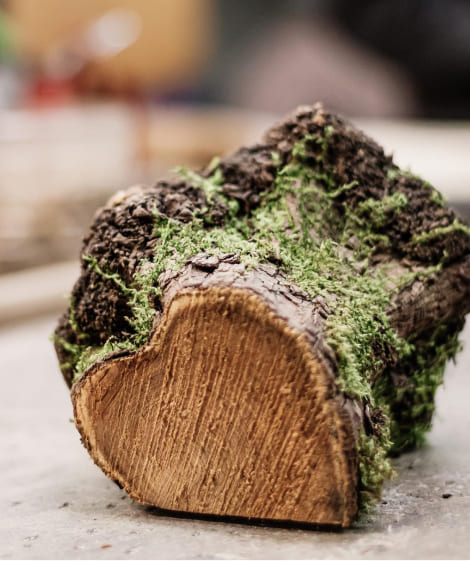
At Forge de Laguiole, we do not receive finished parts; we receive raw materials. The steel arrives in bars, the horn in whole pieces, and the wood in logs. It is here, in the hands of our cutlers, that everything is transformed. Every stage of the manufacturing process is carried out in our workshop, without ever outsourcing what is essential. This choice is no accident: it is the absolute guarantee that our exacting standards apply to every piece, every movement, every detail. From raw materials to the finished knife, nothing escapes our attention. And that is exactly what we want.

Eco-design

Local production

Sustainable materials

Controlled carbon footprint
“Couteau de Laguiole”
Geographical Indication
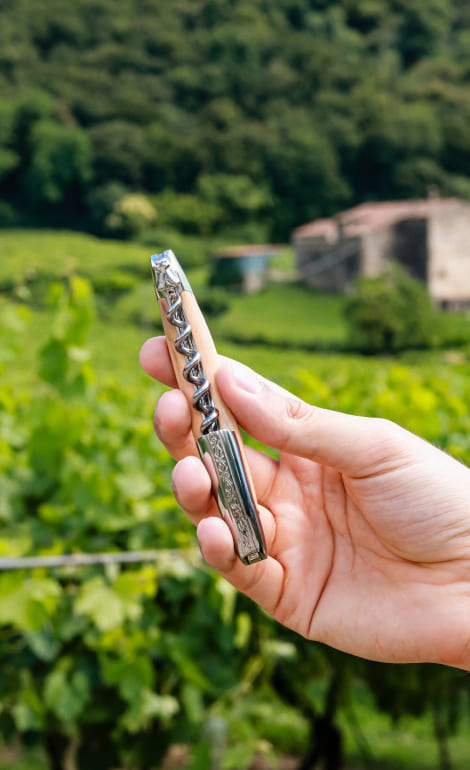
The “Couteau de Laguiole” GI is the first industrial and artisanal geographical indication in the department of Aveyron. It guarantees that every GI knife is manufactured in accordance with strict specifications, within the historic region where this knife originated. A genuine Laguiole knife compliant with the GI is manufactured in northern Aveyron and bears the words “Geographical Indication” alongside the official logo. We are very proud that this label takes pride of place on the blades of our traditional folding knives. (INPI No. 2404)
Our labels
and
certifications
State-Recognised
Living Heritage
The “Entreprise du Patrimoine Vivant” label is one of the highest honours the French government can bestow upon a manufacturer. It recognises rare, masterful craftsmanship that has been passed down through the generations. Forge de Laguiole has held this distinction since 2007.
A responsible and committed
company (UIMM)
Improvement is a choice. Forge de Laguiole has decided to formalise this commitment. By obtaining the “Committed Company” certification issued by the UIMM, we have agreed to have an external body assess our economic, social and environmental practices. This audit has highlighted our strengths, but also the areas where we still have work to do. We accept this, and we are committed to addressing these areas over the next three years. For us, this is what it means to be a responsible company.
Made
in Occitanie
Occitanie is a region of character, living traditions and exceptional craftsmanship. It is here, in this region renowned for its industrial and artisanal heritage, that Forge de Laguiole has based its production for nearly 40 years. Manufacturing in Occitanie means choosing a region, its people and its values, and taking pride in them.
Made
in Aveyron
Aveyron is not like other departments. A land of resistance, authenticity and excellence, it is home to some of France's finest products: Roquefort cheese, the Aubrac cattle breed, aligot, and the Laguiole knife. Forge de Laguiole is proud to be from Aveyron and bears the ‘Made in Aveyron’ label.